If you want coastal access without feeling packed into a beach town, Hampstead deserves a close look. Many buyers are drawn to the water here, but they also want room to spread out, everyday convenience, and a location that works for full-time living. Hampstead offers a mix of boating access, lower-density housing patterns, and practical services that make daily life easier. Let’s dive in.
Why Hampstead stands out
Hampstead is a growing mainland community in Pender County, not a self-contained beach town. The 2020 Census counted 7,016 residents in the Hampstead CDP, and Pender County’s 2025 population estimate reached 72,111, up 19.8% from the 2020 census base. That growth helps explain why Hampstead feels active, evolving, and increasingly important within the coastal North Carolina market.
The area’s appeal comes from balance. You can enjoy a coastal setting and access to the Intracoastal Waterway while still having the kind of space and local infrastructure many buyers want for everyday life. For relocation buyers, second-home shoppers, and primary-home buyers alike, that balance is often the main reason Hampstead rises to the top of the list.
Boating access shapes the lifestyle
For many people, Hampstead starts with the water. County records for a community boating facility at 120 Hugh Edens Lane specifically reference access to the Atlantic Intracoastal Waterway, and county tourism listings place The Sailfish at Marsh Creek Marine directly on the ICW just outside Hampstead. That gives you a strong factual basis for thinking of Hampstead as a boating-oriented community.
That said, not every part of Hampstead is waterfront. The local lifestyle is better understood as water-connected rather than fully waterfront. You may live inland and still be a short drive from launch points, marinas, seafood markets, and the kind of coastal routines that make the area feel tied to the water.
Water and seafood culture also show up in everyday ways. County tourism points to places like Atlantic Seafood Retail Market on NC 210 in Hampstead and Ghost Fleet Oyster Co between North Topsail Island and Hampstead. Those details matter because they show how fishing, boating, and coastal commerce are part of daily life here, not just weekend entertainment.
More space than many coastal areas
One of Hampstead’s biggest advantages is space. Pender County’s 2018 land-use plan notes that commercial development is concentrated along the U.S. 17 corridor, especially in central Hampstead and northeast toward Sloop Point Road. Outside those core areas, the pattern supports a more open residential feel.
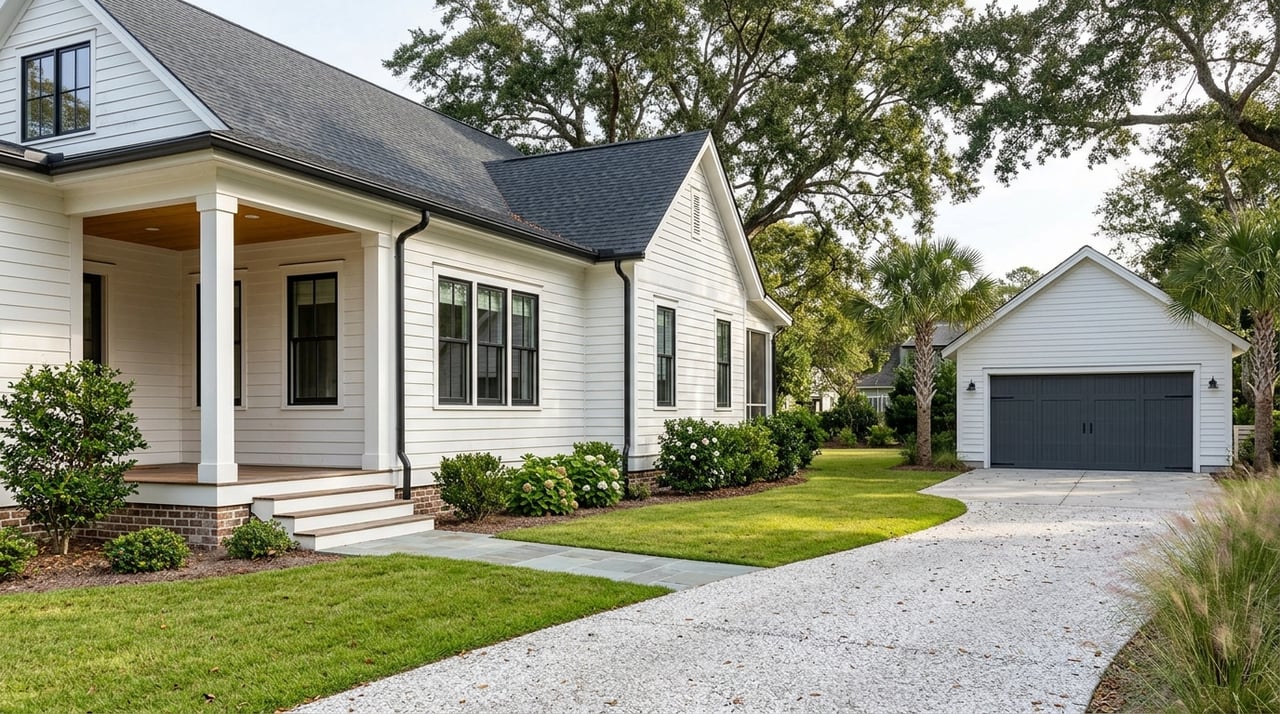
The same plan identified more than 3,500 vacant or infill parcels available for development without further subdivision. It also said most of those parcels were zoned for single-family residential uses with a minimum lot size of 15,000 square feet. For buyers, that supports the idea that Hampstead offers a lower-density coastal market with larger homesites and room for continued growth.
This is one reason Hampstead appeals to people moving from more crowded coastal settings. If you want breathing room, a yard, space for hobbies, or simply a less compressed neighborhood feel, Hampstead often provides that without pushing you far from the coast.
Daily life is easier than you might expect
Some beach-adjacent communities are great for recreation but light on practical services. Hampstead is different. County services are located right in the community, which adds real convenience for full-time residents.
The Hampstead Annex at 15060 U.S. 17 houses planning and community development, permitting and inspections, Health and Human Services functions, the sheriff’s office, and veteran’s services. That local presence gives Hampstead a civic center of gravity that many buyers do not expect when they first start exploring the area.
A new Hampstead branch library is also planned next to the annex. County plans call for a roughly 20,000-square-foot facility with study rooms, a community meeting room, and an expanded children’s area. For buyers thinking long term, projects like this can signal continued investment in daily quality of life.
Recreation goes beyond the water
Boating may grab the headlines, but Hampstead offers land-based recreation too. Hampstead Kiwanis Park spans 53 acres and includes athletic fields, playgrounds, a walking trail with fitness stations, and tennis, pickleball, and basketball courts. That gives residents a central place for exercise, youth sports, and outdoor time close to home.
Pender County is also planning a 3.91-mile multi-use path along Country Club Drive. The path is intended to connect Kiwanis Park to the Topsail schools complex and tie into the East Coast Greenway. That kind of connectivity can make a real difference if you value outdoor activity as part of your routine.
Schools and civic investment matter here
For many buyers, the school footprint is part of understanding a community, even if schools are not the main reason for a move. Hampstead has a notable concentration of school facilities, including Topsail Annandale Elementary, Topsail Middle, and Topsail High. Pender County Schools is also building J.H. Lea Elementary and J.H. Lea Middle School in Hampstead, with opening scheduled for August 2027.
These facts help explain why Hampstead often feels like a place designed for full-time living, not just seasonal use. Schools, parks, county services, and planned public projects all contribute to that sense of stability and growth.
Commuting and access in Hampstead
If you need regional access, Hampstead has several practical advantages. Pender County says the area has easy access to I-40, U.S. 17, and N.C. 132, which helps connect residents to the broader coastal region. For many buyers, this is a key part of Hampstead’s appeal because it supports commuting, hybrid work, and day-to-day mobility.
Traffic is also an important local topic, and improvements are underway. NCDOT says the Hampstead Bypass is being built to improve traffic flow and connection on the U.S. 17 corridor. The first segment from N.C. 210 to Sloop Point Loop Road is expected to open in late 2027, and the segment from N.C. 140 to N.C. 210 is expected to be completed in 2030.
That timeline matters if you are planning several years ahead. Hampstead already offers strong access, but the long-term transportation picture is also evolving as the area grows.
Utilities and infrastructure support growth
In fast-growing communities, infrastructure matters just as much as lifestyle. Pender Water & Sewer says its system serves more than 11,000 residents across six districts. In 2024, it added three operational wells and a 500,000-gallon elevated tank in the Scott’s Hill and Hampstead area while continuing permitting for a membrane water treatment plant in Hampstead.
For buyers, this is useful context. It shows that public infrastructure is being expanded in step with growth, which is often an important part of evaluating a community for long-term ownership.
Local reference points to know
Hampstead is not defined by formal neighborhood lines in the way some master-planned areas are, so practical local reference points can be more helpful. The U.S. 17 and N.C. 210 core around the Hampstead Annex and Topsail schools is one of the area’s main activity centers. This part of Hampstead tends to feel most connected to daily services and the main commercial corridor.
The Sloop Point and Country Club Drive corridor is another useful reference area, especially around Kiwanis Park. Buyers who want access to recreation, schools, and established local routes often pay attention to this part of the market.
Closer to the county line and the ICW, the Scotts Hill or waterfront edge offers a different kind of appeal. Here, the connection to the water can feel more immediate, while still benefiting from the broader convenience that draws people to Hampstead in the first place.
Who Hampstead fits best
Hampstead tends to work well for buyers who want coastal North Carolina living without committing to a denser beach-town setting. It can make sense if you want boating access, a larger homesite, or a community where everyday errands and public services are close by. It also stands out for people relocating to the region who want to compare lifestyle value across several coastal markets.
This is also a place worth considering if you want flexibility. Some buyers prioritize primary living, others want a second home with mainland convenience, and others are looking for land or a property with more outdoor room. Hampstead can serve each of those goals in different ways, depending on where you focus your search.
What to keep in mind as you search
Hampstead’s appeal is real, but it helps to view it clearly. It is not all waterfront, and that is part of its strength. The local identity comes from a mix of inland residential areas, water access, civic investment, and transportation links that support full-time living.
If you are comparing Hampstead to Wilmington, beach communities, or other parts of the Cape Fear region, the key question is often simple: how much do you value space, boating access, and everyday convenience in the same place? For many buyers, that combination is exactly what makes Hampstead stand out.
If you are thinking about buying or selling in Hampstead, working with a local advisor who understands how lifestyle, location, and long-term value come together can make the process much clearer. To talk through your options in Hampstead and across coastal North Carolina, connect with Neil Leonard.
FAQs
Is Hampstead, NC a waterfront community?
- Hampstead is not entirely waterfront. It includes a large inland, lower-density residential base, but boating access and proximity to the Intracoastal Waterway are major parts of the lifestyle.
Is Hampstead, NC good for boaters?
- Yes. County records reference a community boating facility with access to the Atlantic Intracoastal Waterway, and nearby marina-related locations reinforce Hampstead’s boating connection.
Does Hampstead, NC offer larger lots?
- Pender County’s land-use plan supports that view, noting many parcels zoned for single-family residential uses with a minimum lot size of 15,000 square feet.
Is Hampstead, NC convenient for full-time living?
- Yes. The community has local county services, park facilities, school campuses, planned library expansion, and regional road access that support everyday living.
What is commuting like from Hampstead, NC?
- Hampstead has access to I-40, U.S. 17, and N.C. 132. Transportation improvements are also underway through the Hampstead Bypass project, which is planned in phases through 2030.
What kinds of buyers should consider Hampstead, NC?
- Hampstead may be a strong fit if you want coastal access, room to spread out, and practical convenience for a primary home, second home, relocation move, or land purchase.