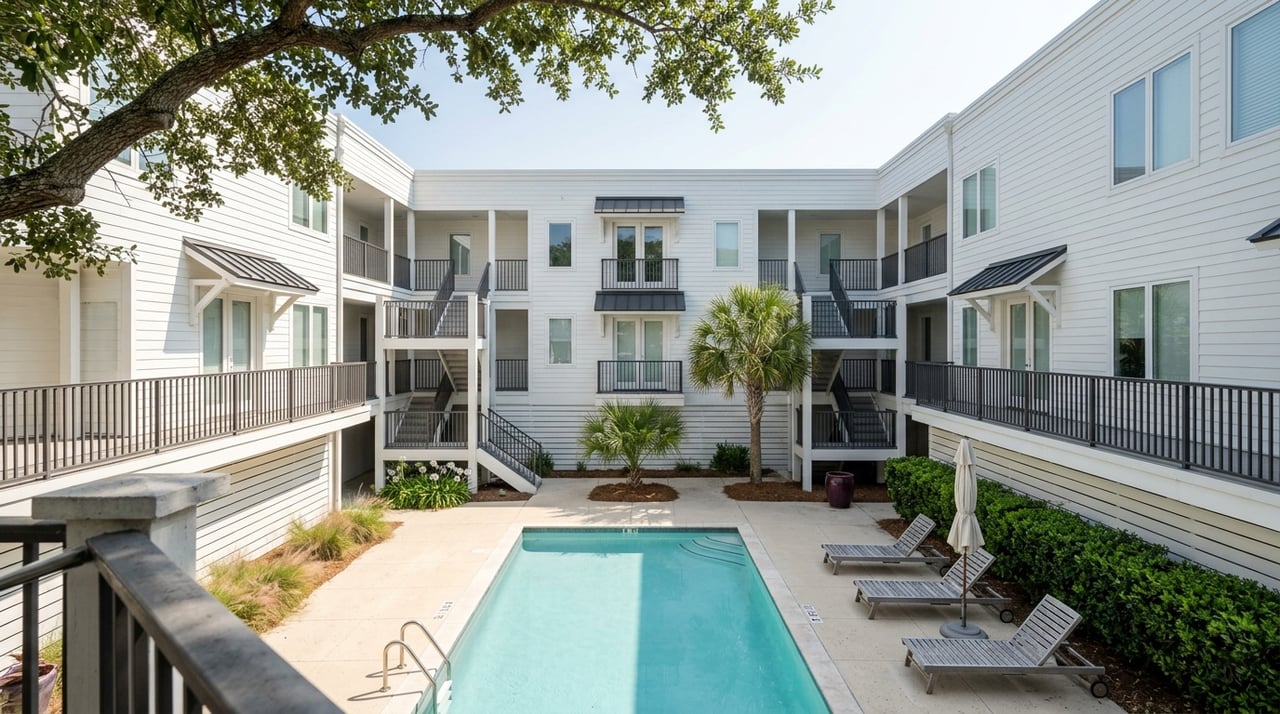
Wondering whether a condo or a cottage makes more sense for your Carolina Beach home? It is a smart question, because in this market, the answer is not always as simple as price or property type. If you want a home that fits your lifestyle, budget, and comfort with coastal upkeep, understanding the tradeoffs can save you time and stress. Let’s take a closer look.
Carolina Beach market context
Carolina Beach sits in a market where condos and cottages can overlap more than many buyers expect. Realtor.com’s May 2026 snapshot shows a $662,000 median listing price, 301 homes for sale, a 71-day median time on market, and a balanced market. The same source also notes that homes sold for an average of 2.71% below asking.
Redfin’s April 2026 data points in a similar direction, with a $649,665 median sale price across all home types and a 102-day median time on market. While the numbers do not match exactly, both sets of data suggest a mid-$600,000s market. That matters because it means your condo-versus-cottage decision should go beyond headlines and focus on how you want to use the property.
Public listing snapshots also show why the choice is not always obvious. Condo listings currently range from about $237,500 to $689,000, while a beach-cottage snapshot shows a median listing price around $679,000. In practical terms, condos often offer a lower point of entry, but there is still meaningful price overlap depending on size, condition, and location.
Condo ownership basics
A North Carolina condo is a specific legal form of ownership. You own your individual unit, while common elements are owned and used in common by the unit owners. Under North Carolina law, the unit owners’ association is also responsible for maintaining insurance on the common elements and handling shared common expenses.
For you as an owner, that often translates to a simpler day-to-day experience. Exterior work, shared spaces, and some building-level responsibilities are handled through the association rather than by each individual owner. That convenience is one of the main reasons condos appeal to many beach buyers.
Still, lower-maintenance does not mean no-maintenance. Condo dues, association rules, and possible special assessments can have a real effect on your monthly budget and long-term plans. Before choosing a condo, you will want to understand exactly what the dues cover and what risks still fall on you.
Cottage ownership basics
A cottage usually offers a more traditional detached-home experience, but that does not always mean complete independence. In North Carolina, a detached home can still be part of a planned community with an owners’ association. In that setup, the association maintains common areas, while the lot owner is generally responsible for the lot and improvements on it.
That creates a different ownership feel from a condo. You usually have more direct control over the property, along with more direct responsibility for upkeep, repairs, and ongoing maintenance. For many buyers, that tradeoff is worth it because a detached home can offer more privacy, storage, and flexibility.
The key point is simple: do not assume cottage means no HOA. A cottage may still come with dues, rules, and shared community costs. The difference is that your personal responsibility for the home itself is usually greater than it would be with a condo.
Location matters more than labels
Carolina Beach is a compact beach town, and that shapes how buyers should think about both property types. The town highlights the beach strand, boardwalk district, and Lake Park, which sits in the heart of town just two blocks from the ocean with a walking path around the lake. Because of that layout, both condos and cottages can work well if your goal is to walk or bike to the beach and nearby attractions.
In other words, the label on the property matters less than the specific block, access, and layout. A well-located condo may offer easier beach access than a cottage farther from the ocean. A close-in cottage may give you the same walkable lifestyle with a different ownership structure.
This is where local knowledge becomes especially important. In Carolina Beach, small differences in street position, parking setup, and access routes can shape your day-to-day experience just as much as square footage.
Parking deserves extra attention
Parking is one of the most overlooked details in Carolina Beach. The town states that parking in the right of way in residential areas is restricted to holders of a Carolina Beach re-entry decal. That means you should not assume street parking will be an easy backup plan.
Whether you are considering a condo or a cottage, verify the number of dedicated spaces that come with the property. Ask where those spaces are located, whether guest parking exists, and how practical the setup will feel during busy beach months. For many buyers, parking can become a deciding factor.
This is especially true if you plan to use the home often, host visitors, or treat it as a primary residence. A property that looks perfect on paper can feel much less convenient if the parking arrangement does not fit your routine.
Coastal risk applies to both
A condo’s easier upkeep does not remove coastal-risk homework. Carolina Beach points residents to flood insurance education materials, FEMA elevation certificates, and historical flood insurance rate maps. The North Carolina Real Estate Commission also flags flood zones, erosion and setback issues, and coastal development restrictions such as CAMA as important issues in coastal real estate.
That means both condos and cottages require careful review. With a cottage, you may feel those responsibilities more directly because you own the lot and improvements. With a condo, some responsibilities may be shared through the association, but you still need to understand the property’s exposure and the building’s overall risk picture.
Before you decide, it is wise to review available flood-related documents, ask questions about the property’s setting, and understand how coastal conditions may affect ownership costs and long-term planning. In a beach market, that homework is part of buying well.
When a condo makes sense
A condo is often the better fit if your top priorities are simpler upkeep, lock-and-leave convenience, and shared responsibility for common elements. If you want to arrive, enjoy the beach, and leave without taking on as much exterior maintenance, a condo may feel more manageable. That can be especially appealing for a second home.
Condos may also offer more accessible entry points based on current public listing snapshots. If you are focused on getting into Carolina Beach at a lower price point, a condo may open more options. Of course, monthly dues and any future assessments should be part of the total-cost picture.
For some buyers, the biggest advantage is predictability. If you value a more streamlined ownership experience and are comfortable with association governance, a condo can be a strong match.
When a cottage makes sense
A cottage is often the better fit if you want a private lot, more control over the property, and space that feels more distinctly your own. For a primary residence, that can be especially attractive if you value parking, storage, outdoor space, or the ability to customize the property over time. Those benefits are hard to ignore in a beach town.
The tradeoff is responsibility. A cottage usually means you are taking on more maintenance, more direct repair decisions, and more hands-on ownership. Even if the home sits in a planned community, your obligations for the lot and improvements are typically much greater than they would be in a condo.
For buyers who enjoy that control, the added work may feel well worth it. A cottage can offer a more traditional homeownership experience in Carolina Beach, with added flexibility that many full-time residents appreciate.
Questions to compare both options
Before choosing between a condo and a cottage, ask yourself a few practical questions:
- Do you want a lock-and-leave second home or a more hands-on primary residence?
- How much exterior maintenance are you comfortable managing?
- What monthly budget works once dues, fees, and maintenance are included?
- How important are private outdoor space, storage, and dedicated parking?
- Would you rather share responsibility through an association or handle more decisions yourself?
- Does the specific location support the walkability or beach access you want?
Those questions often reveal the right answer faster than focusing on property type alone. In Carolina Beach, the best fit usually comes down to how you want to live, not just what you want to buy.
Read the documents carefully
One of the most important steps is reviewing the association and disclosure documents before you commit. The North Carolina seller disclosure form specifically asks about dues, fees, and special assessments payable to an association. That matters because both condos and cottages may come with costs that are not obvious at first glance.
You should read the declaration, bylaws, and disclosure statement carefully. These documents help clarify who maintains what, what fees apply, and how future expenses may be shared. They also help you compare two properties that may seem similar online but function very differently in real life.
Clear paperwork leads to better decisions. In a coastal market with multiple ownership structures, understanding the fine print is part of protecting your budget and your peace of mind.
If you are weighing a condo against a cottage in Carolina Beach, a thoughtful side-by-side review can make the decision much clearer. With deep experience helping buyers navigate coastal North Carolina, Neil Leonard can help you compare lifestyle fit, property details, and the practical realities that matter most.
FAQs
What is the main difference between a Carolina Beach condo and cottage?
- A condo usually offers shared responsibility for common elements and a lower-maintenance ownership experience, while a cottage typically gives you more direct control of the property and more direct maintenance responsibility.
Are Carolina Beach cottages always free from HOA rules and fees?
- No. A cottage can still be part of a planned community with dues, rules, and shared common expenses, so you should review the governing documents before you buy.
Are condos cheaper than cottages in Carolina Beach?
- Often yes at the entry level, based on current public listing snapshots, but there can be real price overlap between condos and cottages depending on location, size, and condition.
Why is parking important when buying in Carolina Beach?
- The town restricts parking in the right of way in residential areas to holders of a Carolina Beach re-entry decal, so dedicated on-site parking can have a big impact on daily convenience.
Do Carolina Beach condos avoid flood and coastal concerns?
- No. Both condos and cottages require you to review flood-related information and consider coastal issues such as flood zones, erosion, setbacks, and development restrictions.
Which property type works better as a second home in Carolina Beach?
- Many buyers prefer condos for second-home use because they often offer simpler upkeep and easier lock-and-leave ownership, though the right fit depends on your budget and goals.